This blog post is longer than usual, so grab a coffee and prepare for a deep dive into a murky world.
In May 2025, I came across the results of a survey on BookBub:
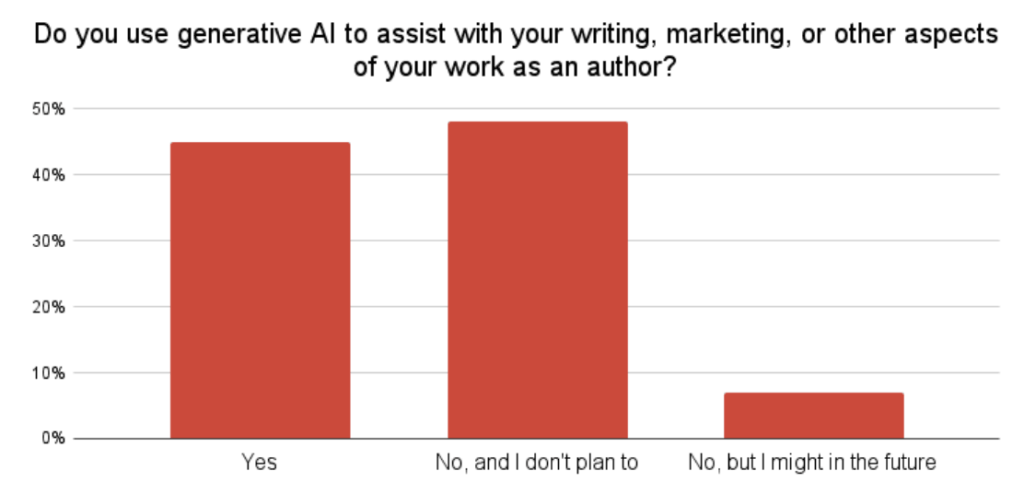
Gentle reader, I was shocked. 45% are using AI in some way. I don’t know how authors were recruited to the survey, but 69% are self-published, and 56% first published between 2010 and 2020 (so serious about their writing). Many authors are writing in multiple genres and–worryingly for me–59% included romance or rom-com as one of their genres.
First of all, remember that Artificial Intelligence is not actually ‘intelligent.’ We’re really talking about a Large Language Model (LLM) sucking up words from the internet and making algorithmic connections. The vast majority of those words were written by people who didn’t give their permission, or get paid.
So, theft.
Onwards.
Maybe these BookBub survey authors are using it to, say, come up with marketing plans?
Well, no. Almost 50% frequently use if for ‘outlining or plotting’. Here’s what one author said:
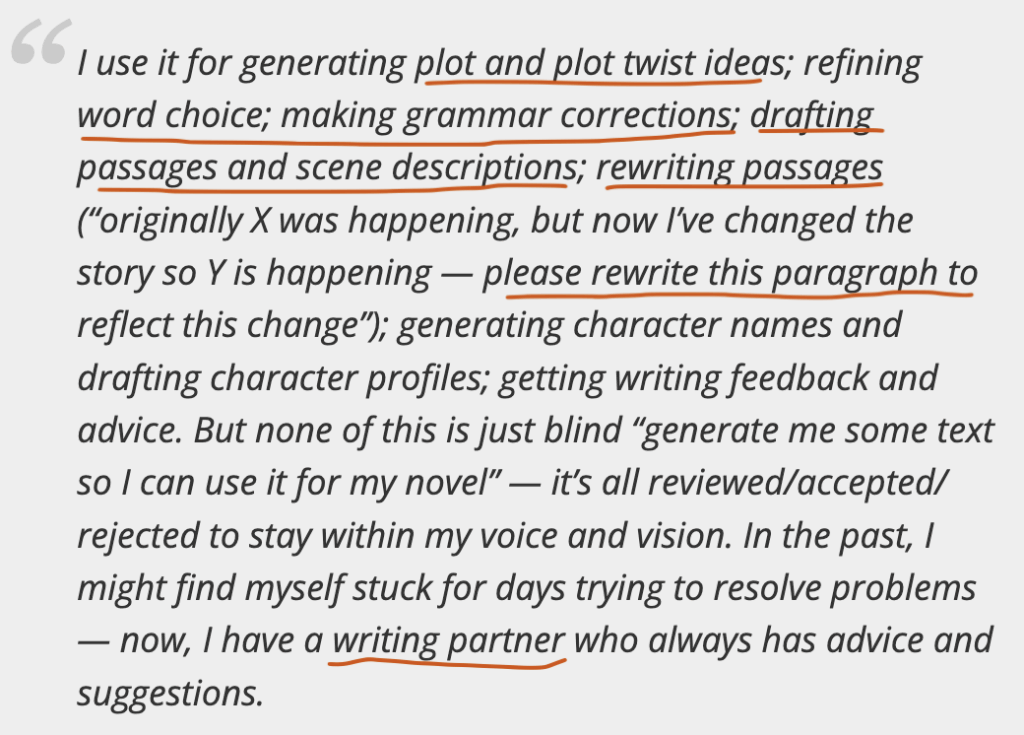
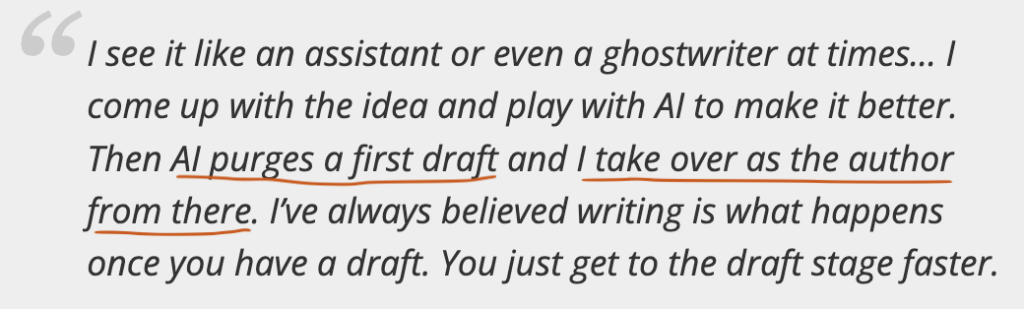
Hmm. That feels more than a writing partner or an editor to me. The author below uses AI as a ghostwriter, producing the first draft (not sure whether ‘purges’ is a typo, or Freudian slip).
Then, later that month, I noticed a Twitter post: Indie Book Spotlight found three examples of AI prompts being left in novels. Here’s a screenshot of an extract from Lena McDonald’s Dark Hollow Academy with the AI comment highlighted.
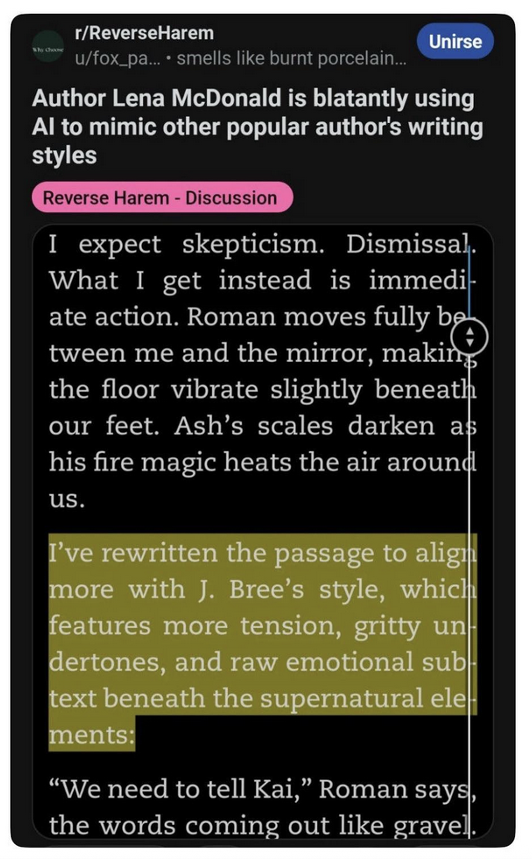
Careless, at the very least.
Now, what’s going on here?
The highlighted section is AI’s politely worded editorial comment. (That’s AI saying “I’ve re-written” – not an editor.) It looks like the author has asked AI to make the work similar to J Bree’s style. J Bree is an internationally best-selling author of Dark Romance. All her work will have been ‘scraped’ by the LLM.
Online, there was considerable anger thrown at Lena McDonald.
But here’s the thing: I’m pretty certain Lena McDonald doesn’t exist.
I don’t mean, it’s someone with a pen name. (Shocker here: Imogen is not my ‘real’ name. But I am a real person). In all likelihood, there’s a tech-bro company behind this. “Lena McDonald” has no Twitter or Facebook account. An Instagram account was set up in April, with an AI generated image (what else?) and a single post.
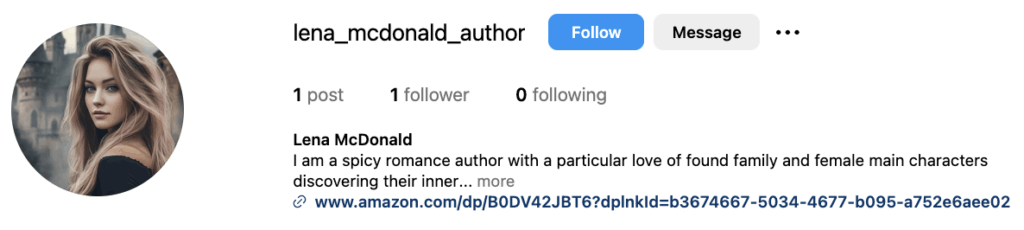
There is a biography on Amazon, saying she’s a “teacher by day, a writer by night, and 24/7 mom.” The biog even addresses the AI prompt issue; she says she couldn’t afford a professional editor so turned to AI as a tool to “help refine my writing”.
Frankly, I’m not buying it. Here’s why:
Scroll down “Lena McDonald”s Amazon page and you find 13 titles: a three-book series ‘Dark Hollow Academy’, published a month apart; a few books under a pen name Sienna Patterson; and this:
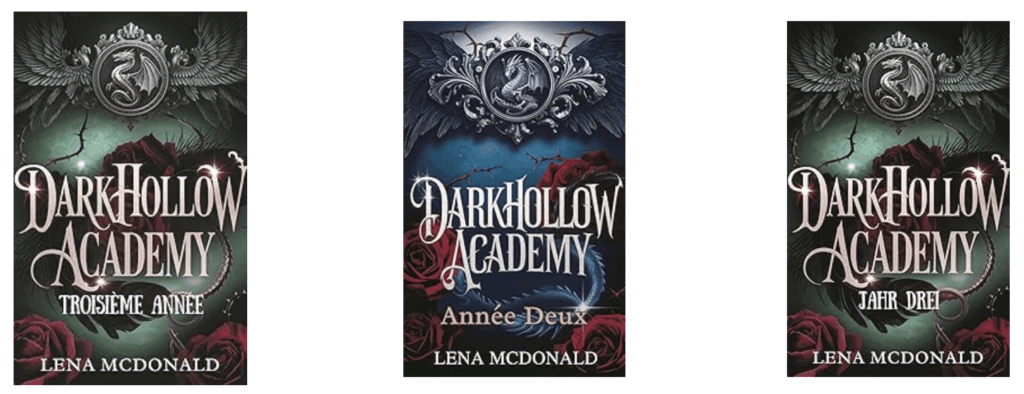
The books in French and German. That’s pretty industrious for a teacher/ 24:7 mom.
Do we think Ms. McDonald / the tech-bro commissioned a translator for these books? I think not.
And do I even need to ask whether the tech-bro paid for a cover designer?
But… if the book is worth reading, does this matter?
Here’s a 5-star review of Dark Hollow from Goodreads:
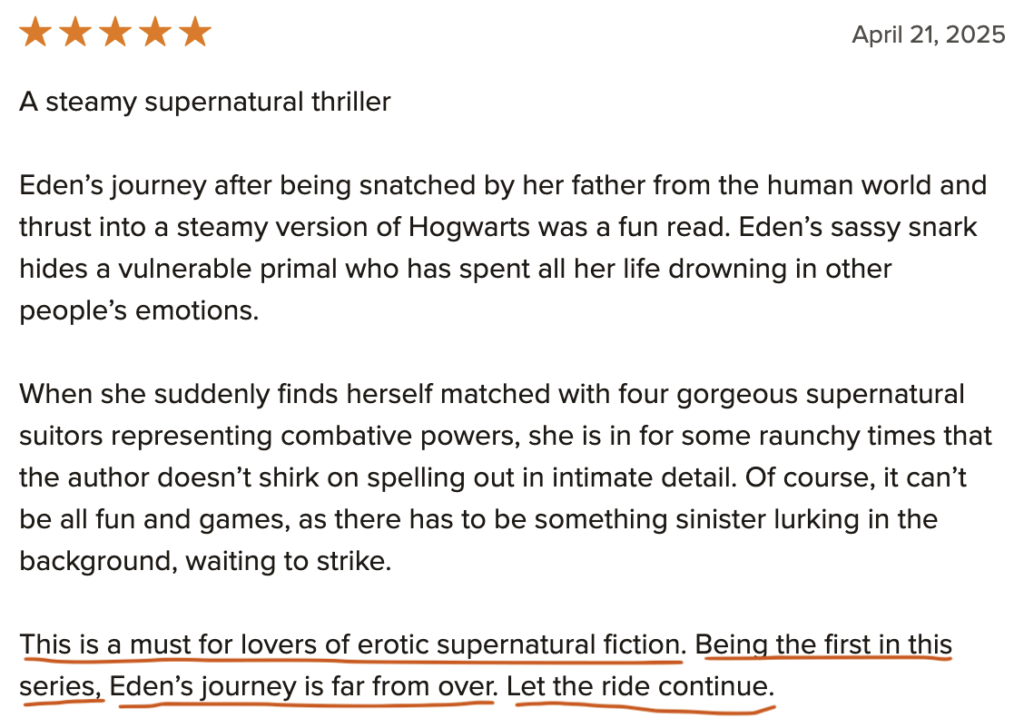
Now, I don’t know about you, but that looks like regurgitated book-blurb to me. Or possibly it’s been written by AI. Yes folks, it’s AI all the way down.
But then we find this one-star review:
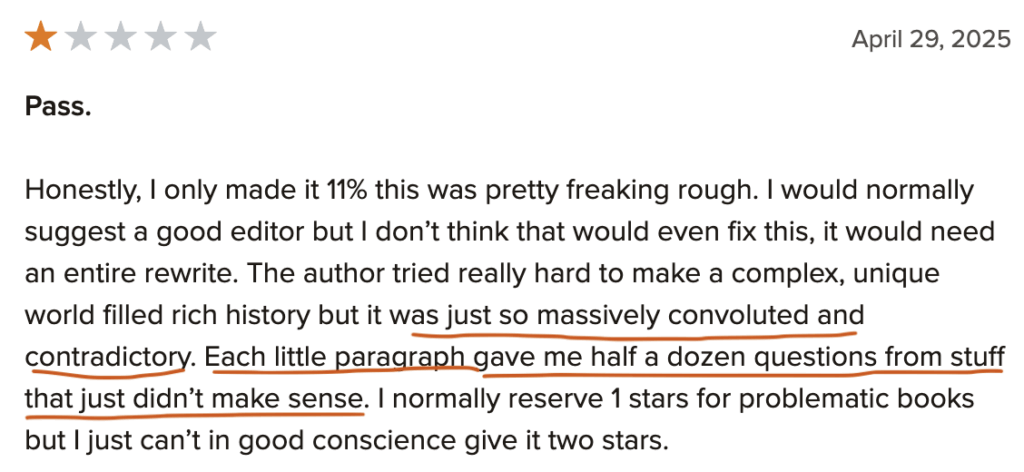
AI wasn’t used “to help refine” the writing, as an editor might help an author. This authentic review tells me that pretty much the whole darn thing has been written through AI – in much the way the author who responded to the BookBub survey talked about getting AI to produce the first draft.
To be clear:
This is the commodification of writing.
It’s the commodification of reading.
It’s using AI to make the act of writing an industrial process.
And I doubt this is a few clever geeks sitting in their bedroom, delighted to have hit on a way to make money. I suspect there are businesses behind this.
But again, does this matter? Does it harm anyone? Why shouldn’t clever geeks make a living this way?
Well, yes, it harms me. And other digitally published authors. Let me explain Kindle Unlimited to you.
Kindle Unlimited is a digital subscription service for avid readers. They pay a monthly subscription and can download dozens of books each month (sorry, I don’t know the exact numbers). Here’s how the authors get paid: all the subscriptions are lumped together in a big pot (after Kindle’s cut), and distributed to the publisher/ author according to how many pages all the readers have read of that author’s book.
This worked well for me last year. Worked so well, that I was able to move towards my dream of writing being my main source of income and my consultancy stuff being second-fiddle – rather than the other way round.
But if Kindle Unlimited is flooded with industrially produced books, then the “pot” is being spread far, far thinner. And remember, someone who has mastered AI in this way can produce a book a day.
This industrial process is already happening.
And it’s harming YOU, the reader.
First of all, you may have spent $3.85 on one of those “Dark Hollow Academy” books, not knowing what you were in for.
Secondly, I believe it will degrade the quality of genre fiction. The AI bots ‘scrape’ the internet for existing books and feed it into the LLM. It’s very likely bots have already fed the Dark Hollow Academy books into their system. This has been described as the Hapsburg Chin problem (hat tip to writer Helen Gaskell for this). The Hapsburgs were a powerful dynasty in Europe for centuries. They tended to intermarry, leading to congenital health conditions, including large noses and chins.
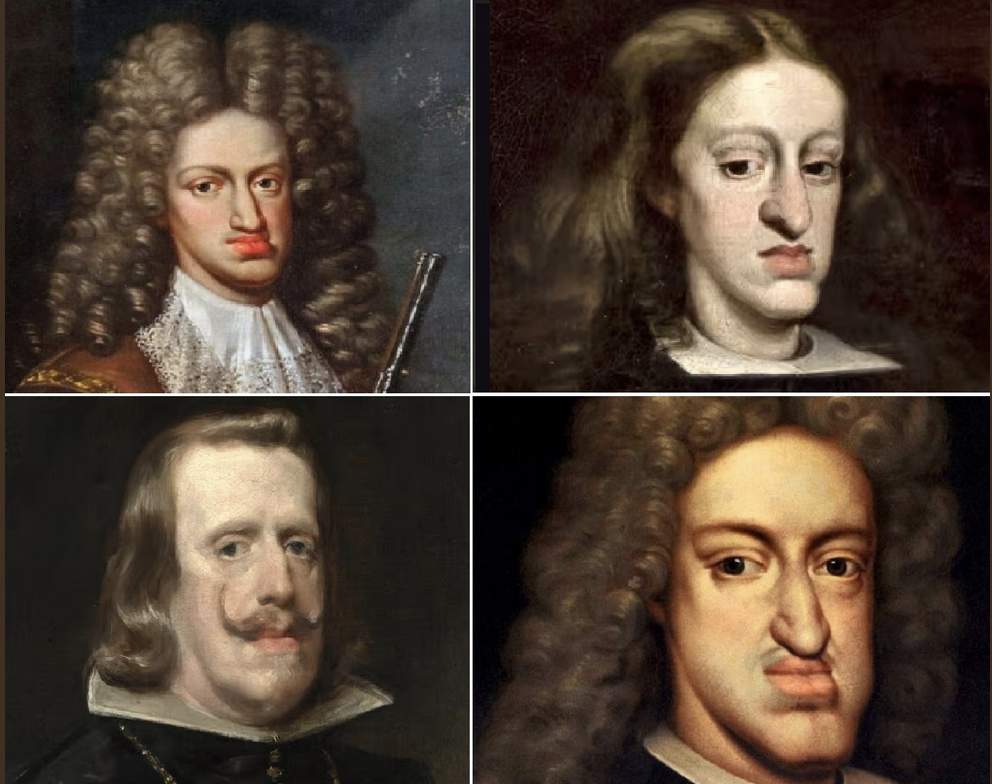
In the same way, as the LLM feeds on stuff produced by previous AI programmes, it will reproduce the errors and deficiencies.
Which may be what eventually protects authors such as myself. And this is why the tech-bros are so desperate to get their hands on “real” novels and articles.
What can be done about this?
I would suggest
a) if the cover of the book you are buying looks like it’s been AI generated, then tread carefully.
b) if you are a Kindle Unlimited (KU) reader and think you have downloaded an AI book, then, I beg of you, STOP READING! Don’t flip through the digital pages and get to the end. This will register the pages you have read, and will mean real authors are missing out of their income.
c) spread the word to other KU readers.
For the future, my suggestion is a quality mark that readers can trust to know that the book was written by a person. Then readers can choose if they want a largely AI book or not.
If you have enjoyed this post, sign up to my monthly newsletter for quirky historical takes, bookish news and behind the scenes peaks at author’s life. You’ll also get some special offers.